

SEO for Cosmetic Surgery Practices: Attracting High-Value Patients in 2026
In the digital age, the cosmetic surgery industry is hyper-competitive. Patients no longer just search for “plastic surgeon”; they search for specific procedures, recovery times, and social proof. As we move into 2026, clinics must adopt Medical SEO strategies that prioritize patient trust and authority to acquire high-value leads.
Key Takeaways
| Priority | Strategy |
|---|---|
| Local Visibility | Dominate the “Map Pack” for procedure-specific terms (e.g., “Rhinoplasty [City]”) |
| Medical Authority (E-E-A-T) | Demonstrate Board Certification and medical expertise in all content |
| Visual Search | Optimize “Before & After” galleries for Image Search and AI detection |
| Video SEO | Leverage short-form video (Reels/TikTok) to answer patient FAQs |
| Reputation Management | Automate patient review generation to build trust signals |
Top SEO Priorities for 2026
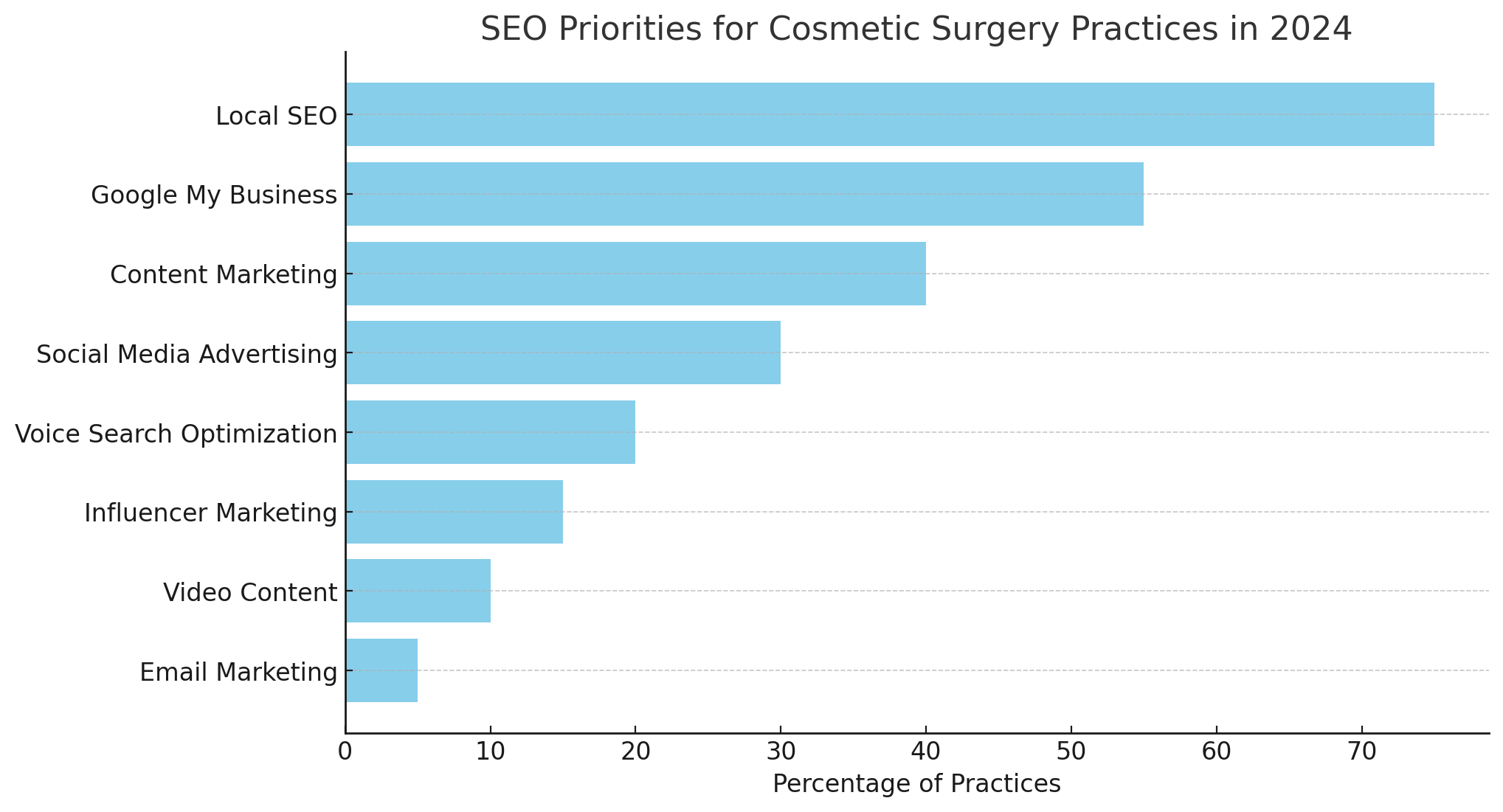
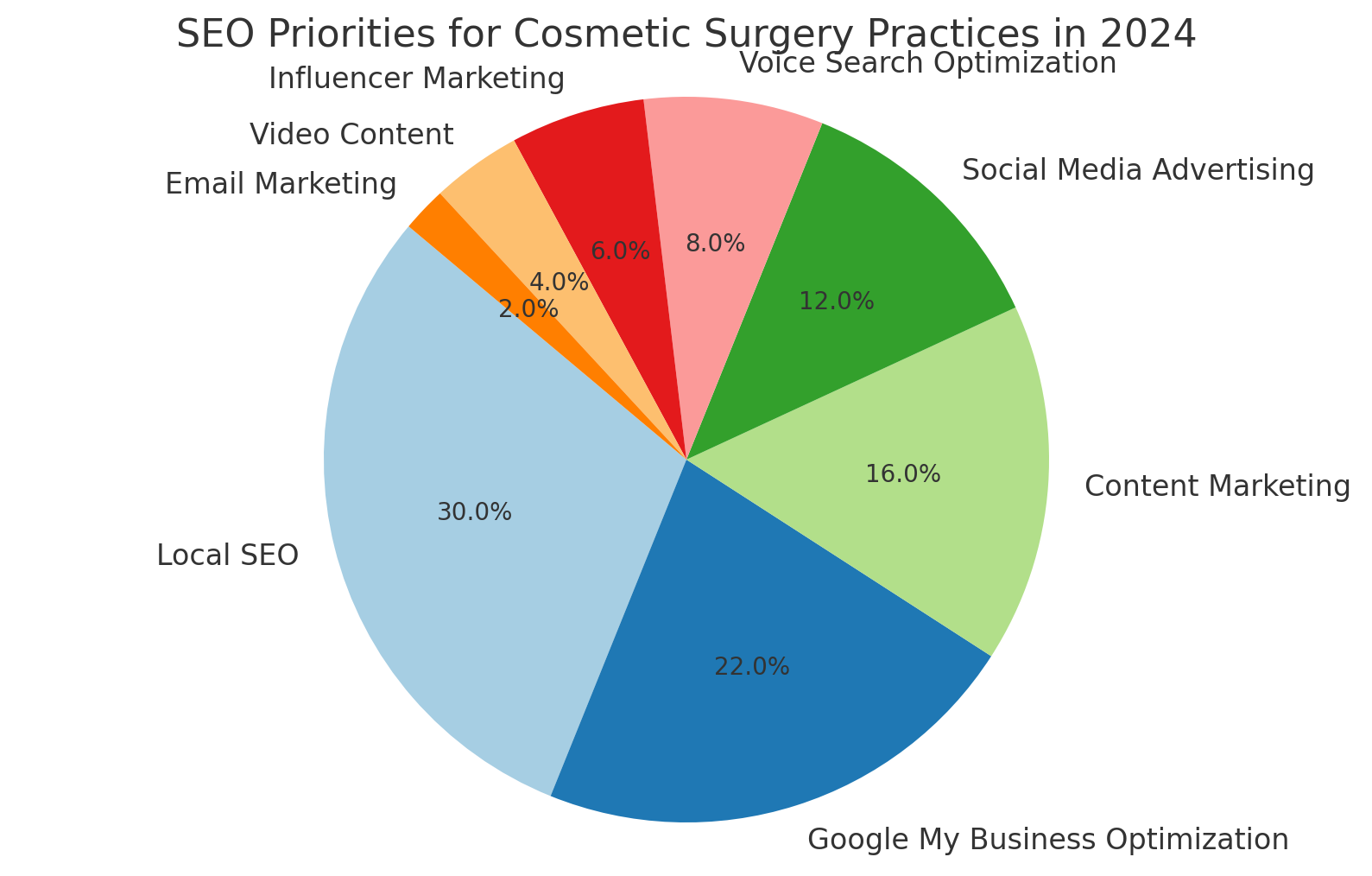
Visualized below is a comprehensive breakdown of SEO priorities for aesthetic practices in 2026. The focus has shifted from simple keywords to building a brand that survives Google’s “Your Money Your Life” (YMYL) filters.
- Local SEO & The Map Pack (75%)
- For surgeons, the battle is won in the “Local Pack.” Potential patients search for convenience and local reputation. You must ensure your clinic appears in the top 3 map results for terms like “Botox near me” or “Breast Augmentation [City].”
- Check out our guide on Local SEO for detailed insights.

- Google Business Profile Optimization (55%)
- Your Google Business Profile is your digital storefront. In 2026, it must be updated weekly with “Google Posts” showcasing offers, Q&As about procedures, and high-quality facility photos.
- Read our article on Enhance Your Google My Business Listing for actionable tips.

- E-E-A-T & Medical Content (40%)
- Experience, Expertise, Authoritativeness, and Trustworthiness (E-E-A-T). Google creates a high barrier for medical websites. To rank in 2026, your content must be written or reviewed by medical professionals, cite academic sources, and clearly display surgeon credentials on every page.
- Visual & Video SEO (30%)
- Cosmetic surgery is inherently visual. SEO in 2026 requires optimizing your “Before & After” galleries with descriptive alt text and schema markup. Furthermore, integrating short-form video (patient testimonials and procedure explainers) keeps users on your site longer, boosting rankings.
- Answer Engine Optimization (AEO) (20%)
- Patients use voice search and AI tools to ask private questions: “What is the recovery time for liposuction?” Optimizing your FAQ pages to provide direct, concise answers helps you rank in AI overviews and voice search results.

Steps to Implement Medical SEO Strategies
Now that we’ve identified the priorities, let’s look at practical steps to implement these strategies in a clinical setting:
- Audit Your Reviews: Reply to every review on Google. High engagement rates signal trust to search engines.
- Build Procedure Pillars: Create detailed, medically accurate pages for every specific treatment (e.g., separate pages for “Tummy Tuck” vs. “Mini Tummy Tuck”).
- Leverage Patient Stories: Use video testimonials (with consent) to increase “Time on Page” metrics.
- Technical Security: Ensure your site is HIPAA/GDPR compliant. A secure site (HTTPS) is non-negotiable for medical rankings.
Conclusion
Adopting these advanced SEO strategies can help cosmetic surgery practices dominate their local market in 2026. It is no longer just about traffic; it is about building a digital reputation that converts.
Explore our SEO services to boost your clinic’s visibility online.