

SEO For Building Supplies: Trade Accounts & B2B Growth
In 2026, the building supplies market is divided. On one side, you have DIY homeowners; on the other, professional Trade Buyers. Effective SEO must bridge this gap. Building Merchants can no longer rely on simple product listings. To win, you must optimize for real-time inventory visibility, bulk specification searches, and frictionless mobile ordering for contractors on the job site.
SEO For Building Merchants in 2026
Key Takeaways
| Strategy | 2026 Benchmark |
|---|---|
| Local Inventory Ads (LIA) | 70% of clicks go to merchants showing “In Stock” labels on Maps. |
| Trade Account SEO | Optimizing for “Bulk pricing” and “Trade login” queries. |
| Technical Schema | Using MerchantReturnPolicy and hasMerchantReturnPolicy for trust. |
| Voice Search | 30% of site managers use voice search for materials while on-site. |
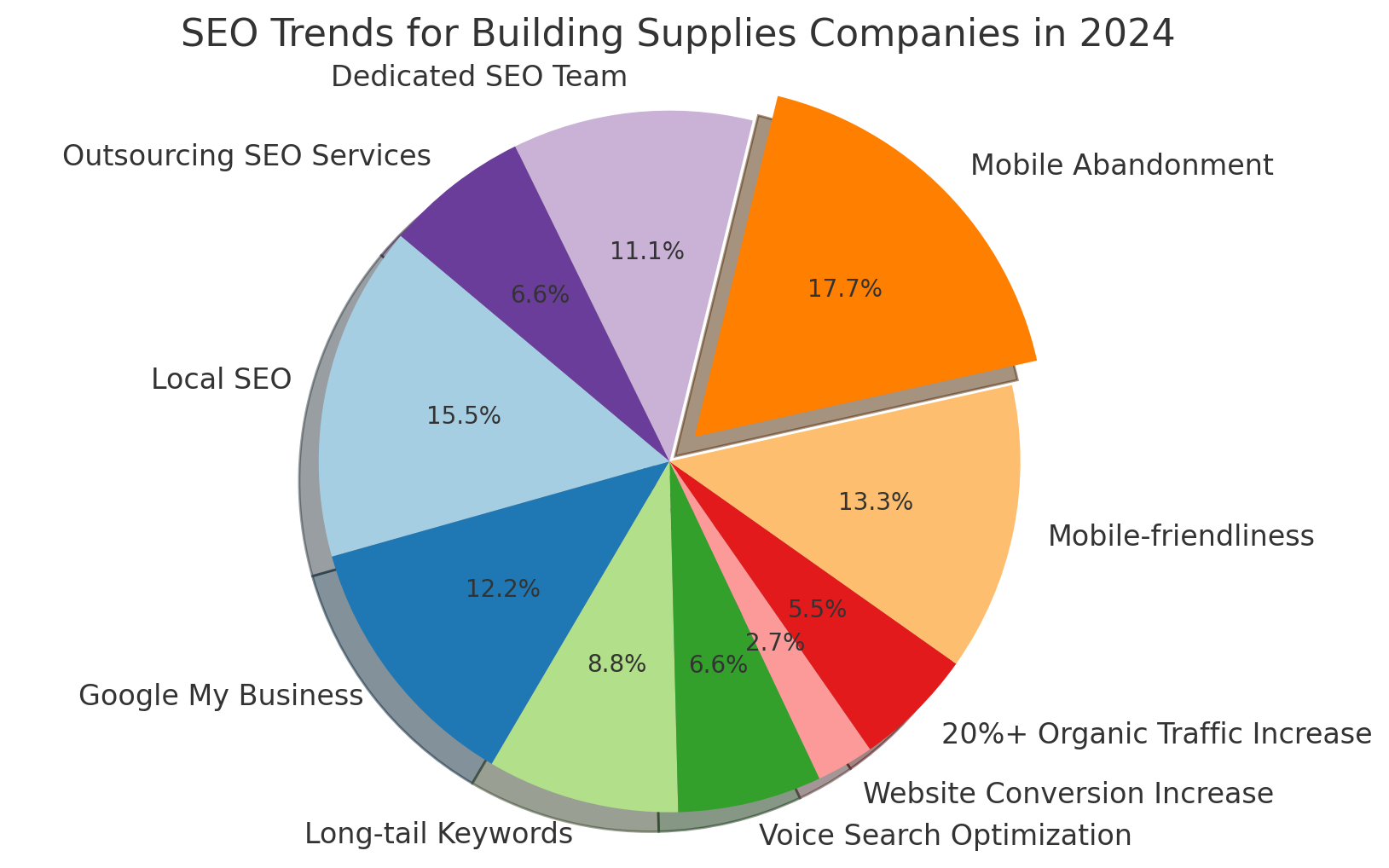
| Mobile Commerce | 80% of urgent supply orders are placed via mobile devices. |
Managing Massive Catalogs (Technical SEO)
Building merchants often have thousands of SKUs (e.g., thousands of screw variations). This creates “Duplicate Content” issues. In 2026, your Technical SEO strategy must focus on:
- Faceted Navigation: Ensuring Google doesn’t waste budget crawling every filter combination (Size x Color x Material), while still ranking for “M5 Stainless Steel Screws.”
- Product Variants: Using canonical tags correctly to consolidate authority to the main product page.
- Structured Data: Implementing
Productschema that displays Price, Availability, and Shipping Times directly in search results.
Note: If you are a contractor looking for leads rather than a supplier selling products, read our guide on SEO for Construction Companies.

The “Near Me” Stock Battle
When a site manager runs out of cement, they don’t buy from the cheapest source; they buy from the nearest source with stock.
Your Local SEO strategy must integrate your ERP system with your Google Business Profile. If you have it in the yard, Google Maps should say “In Stock.” This drives footfall to the trade counter.
For more on dominating the map pack, check out our Local SEO page.

B2B vs. B2C Content Strategy
Building a strong online presence means speaking two languages:
- The DIY Content: “How to build a deck” (Top-of-funnel traffic).
- The Trade Content: “Fire rating specifications for C24 Timber” (Bottom-of-funnel B2B traffic).
We help merchants structure their blogs to capture high-volume DIY traffic while using “Gated Content” (Trade Accounts) to capture high-value commercial contractors.
Learn more about reputation management on our Google My Business page.

Measuring Trade Performance
For building suppliers, “Traffic” is a vanity metric. We focus on:
- Trade Account Signups: The conversion that matters most.
- Click-to-Call: Urgent orders from mobile devices.
- Local Inventory Lookups: Users checking stock at specific branches.
Conclusion
The field of Building Supplies SEO is shifting from simple e-commerce to complex inventory management and local dominance. By implementing advanced Schema and segmenting your B2B/B2C audiences, you can dominate the digital shelf in 2026.
This guide provides a comprehensive understanding of SEO strategies tailored for building merchants. For continuous improvement and to stay updated, contact us for detailed consultations.