

SEO for Financial Advisors in 2026 – The Complete Guide to Financial Services SEO
By Jonathan Reeves | February 16, 2026
What Is SEO for Financial Advisors?
SEO for financial advisors is the process of optimising a financial planning or wealth management website to rank prominently in search engines and AI-generated search results for high-intent queries such as retirement planning, investment advice, and tax-efficient wealth strategies.
Because financial services fall under Google’s “Your Money or Your Life” (YMYL) category, search engines apply stricter standards for expertise, authority, and trust. In 2026, strong rankings require more than keywords — they require demonstrable credibility.
Why SEO Is Critical for Financial Services
Prospective clients now research extensively before booking a consultation. Common searches include:
- “Independent financial advisor near me”
- “Best retirement planning strategies UK”
- “How to reduce inheritance tax legally”
- “Fee-only financial advisor”
- “Wealth management for business owners”
If your website does not clearly answer these questions — with authority — competitors and large aggregator platforms will dominate visibility.
The Core Pillars of Financial Advisor SEO
1. High-Intent Keyword Strategy
Financial SEO begins with identifying search terms aligned with client needs. These typically fall into three categories:
- Service-based keywords: financial planning, investment advice, retirement planning
- Problem-based keywords: how to minimise tax, pension shortfall planning
- Location-based keywords: financial advisor in London, wealth manager Manchester
Each major service should have a dedicated, in-depth page. Avoid combining multiple services into thin, generic content.
2. AI Overview & Answer Engine Optimisation (AEO)
Google now summarises financial topics directly in AI Overviews. To increase the likelihood of being cited:
- Provide clear, fact-based definitions
- Maintain a neutral, professional tone
- Avoid exaggerated performance claims
- Use structured headings and concise answers
Example of an AEO-optimised answer:
What does a financial advisor do?
A financial advisor provides personalised guidance on investments, retirement planning, tax efficiency, and wealth management. They assess a client’s financial goals and create structured strategies to help achieve long-term financial stability.
This clarity improves eligibility for featured snippets and AI-generated summaries.
3. E‑E‑A‑T: Experience, Expertise, Authority & Trust
For financial advisors, credibility is not optional. Your website should clearly display:
- Professional qualifications (e.g., CFP, Chartered Financial Planner)
- Regulatory status (e.g., FCA authorisation in the UK)
- Years of experience
- Professional memberships
- Transparent fee structures
Author pages should include full bios and credentials. Anonymous financial content performs poorly in 2026 search systems.
4. Service Page Depth & Structure
Each core service — retirement planning, wealth management, tax planning, estate planning — should include:
- Clear explanation of the service
- Who it is for
- Common financial concerns addressed
- Process overview
- FAQs
- A consultation call-to-action
Thin or generic service pages reduce both rankings and conversion rates.
5. Local SEO for Financial Advisors
Many clients prefer advisors within their region. To improve local visibility:
- Optimise your Google Business Profile
- Maintain consistent Name, Address, and Phone details
- Collect verified Google reviews
- Create city-specific landing pages
Local visibility is especially important for independent advisory firms competing with national brands.

6. Content Marketing for Authority
Educational content strengthens topical authority and builds trust before a consultation.
Effective formats include:
- Retirement planning guides
- Tax planning explainers
- Market update articles
- Investment risk breakdowns
- Estate planning checklists
Well-structured content of 1,200–2,000 words often performs best for competitive financial topics.
7. Mobile Optimisation & Technical Performance
Financial research increasingly happens on mobile devices. Your website must:
- Load quickly
- Be fully responsive
- Use secure HTTPS encryption
- Have clear navigation
- Include structured schema markup
Technical weaknesses undermine even the strongest content strategy.
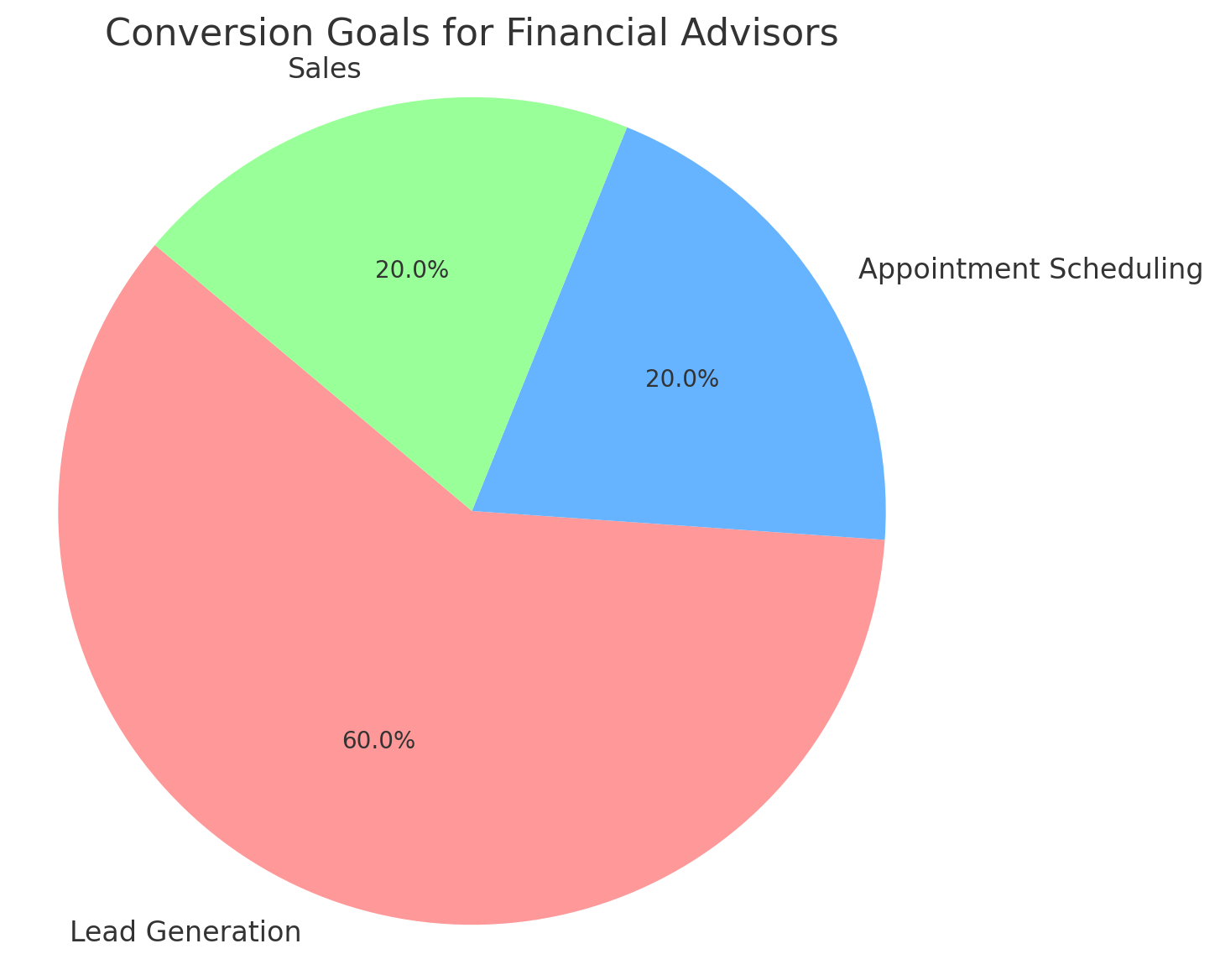
8. Conversion Optimisation
SEO traffic must translate into consultations. Financial advisory websites should include:
- Clear “Book a Consultation” buttons
- Trust badges and regulatory disclosures
- Case studies (compliant and anonymised)
- Transparent fee explanations
The average website conversion rate in financial services ranges between 2% and 5%, but strong trust signals can significantly improve this.
Frequently Asked Questions
How long does SEO take for financial advisors?
Most advisory firms see measurable improvements within 4–6 months, with stronger competitive positioning developing over 6–12 months depending on market saturation.
Is SEO compliant with financial regulations?
Yes, provided content is accurate, transparent, and does not make misleading financial claims. Regulatory compliance should always be reviewed before publication.
Can financial advisors appear in AI-generated search results?
Yes. Advisors who publish structured, fact-based content with strong credentials and authority signals are more likely to be cited in AI Overviews.
Final Thoughts
SEO for financial advisors in 2026 requires authority, clarity, and technical precision. Firms that demonstrate genuine expertise — supported by qualifications, structured content, and local visibility — will outperform competitors relying on outdated marketing tactics.
Trust is the foundation of financial services. Your SEO strategy must reflect that.
About the Author
Jonathan Reeves is a financial services digital marketing specialist with over 15 years of experience working with independent financial advisors, wealth managers, and regulated advisory firms. He focuses on compliant, authority-driven SEO strategies aligned with evolving AI-powered search systems.